
Maryville’s Water.
Maryville’s Future.
Investing today in a reliable water system for generations to come.
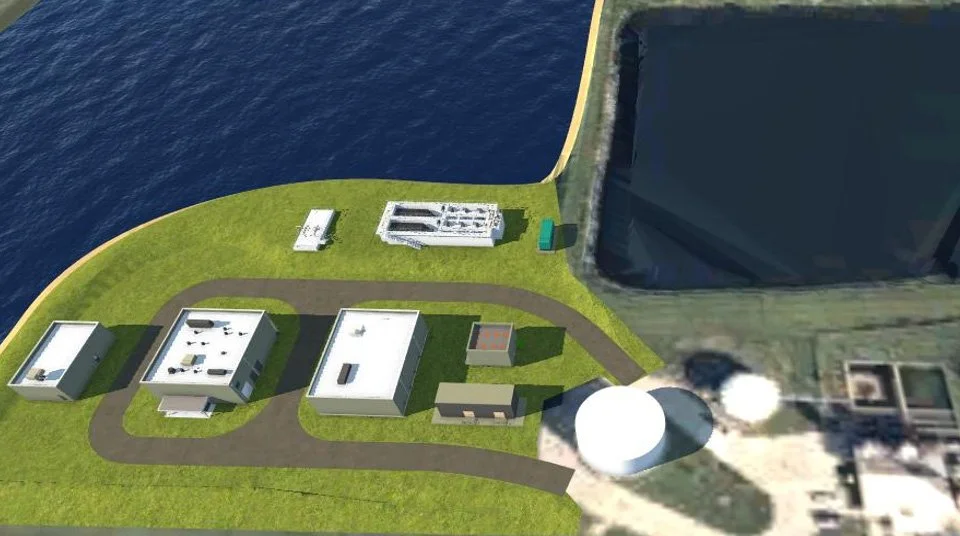
The City of Maryville is investing in a new Water Treatment Plant to provide reliable, high-quality drinking water for our community and our region for generations to come.
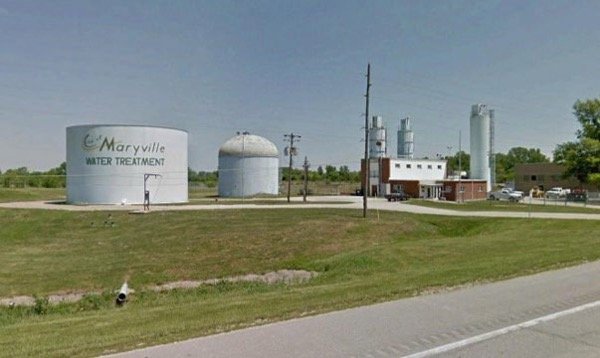
Maryville's existing Water Treatment Plant was constructed in 1958 and was originally designed to treat water from the 102 River. When extended drought events threatened the amount of water available from the 102, our community constructed a new source for raw drinking water, Mozingo Lake. In 1994, our water treatment plant was retrofitted to treat the new lake water, but it was never the perfect solution. The membranes used to treat water, for example, do not operate efficiently in very cold weather, and regularly need to be replaced at a cost of hundreds of thousands of dollars. We replaced membranes in 2004, 2011, 2020, 2025, and again in 2026.
Beyond the treatment membranes, many components of the existing plant have lived beyond their designed life. The City has identified building deterioration, aging equipment and infrastructure, and limited redundancy as other concerns to be addressed by the project.
Why a New Water Treatment Plant?
A new water treatment plant will provide Maryville with modern technology designed specifically to treat water from Mozingo Lake.
The selected treatment process uses ozone and biological active filtration (BAF) to address organic compounds such as MIB (2-Methylisoborneol) and geosmin that can contribute to taste and odor concerns. Multiple treatment processes were evaluated during a 9-month pilot study to determine the most efficient and most effective way to treat our water. The ozone/BAF treatment process is the best fit for our water, and has been approved by the Missouri Department of Natural Resources.
How Is the Project Being Funded?
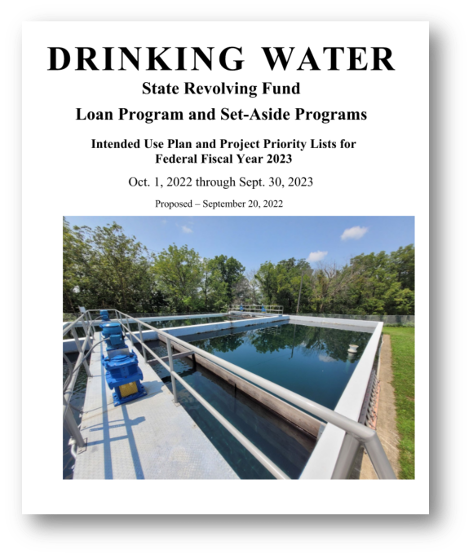
The City is financing the project primarily through Missouri's Drinking Water State Revolving Fund (SRF) program.
The primary project funding mechanism is a $50 million SRF loan administered by the Missouri Department of Natural Resources. A $2.5 million Disadvantaged Community Grant has also been awarded to the City, providing $52.5 million in total available project funding.
Using the State SRF required the passage of revenue bonds, which represent a form of collateral for the financing. Maryville voters passed new revenue bonds with more than 80% approving on February 4th, 2025 to support the construction of the new water treatment plant.
Ballot Language
"Shall the City of Maryville, Missouri issue its waterworks system revenue bonds in the amount not to exceed $50,000,000 for the purpose of acquiring land for a new water treatment plant and acquiring, constructing, extending, and improving its waterworks system, including, but not limited to (1) constructing a new water treatment plant and associated buildings; constructing and improving intake modifications at the new water treatment plant; and constructing, improving and extending water transmission mains to connect the new treatment plant to the water system; and (2) decommissioning, demolishing, modifying, and/or repurposing the existing water treatment plant, the cost of operation and maintenance of said waterworks system and the principal of and interest on said revenue bonds to be payable solely from the net revenues derived by the City from the operation of its waterworks system, including all future extensions and improvements thereto?"
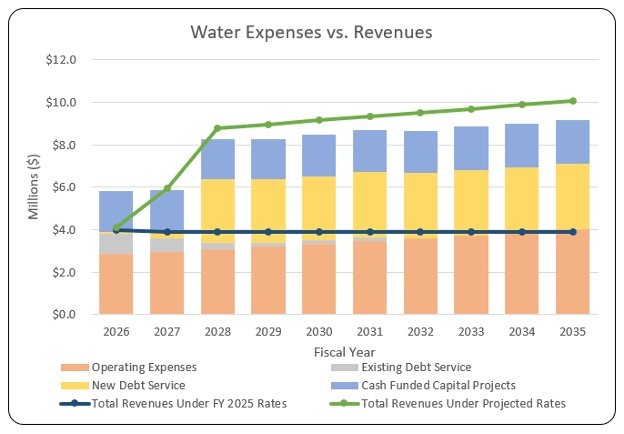
Graphic from New Gen Strategies & Solutions’ Rate Analysis Model, 2026
Why Are Water Rates Changing?
Water and wastewater utilities are required to generate enough revenue for operations and maintenance, system repairs, replacing and upgrading aging infrastructure and meeting debt obligations. The State SRF also requires water rates to cover 110% of operations and maintenance and establish a reserved “replacement fund”, which is used exclusively to improve the water system infrastructure. These requirements serve as a hedge against future repairs and expansion of the system, allowing the city to pay these expenses without jeopardizing the basic fiduciary requirements of the water treatment system.
Maryville’s current water rates are not sufficient to finance the construction of the new plant and meet SRF requirements. A recently- updated rate study evaluated the cost of the new Water Treatment Plant, ongoing operations and maintenance, debt service and long-term infrastructure replacement needs, as well as SRF-required financing tools, to determine future water rates.
What Is Changing?
Water rates will increase in phases rather than through one single adjustment. Under the City's current 20-year SRF financing plan:
Water rates increase approximately 50% in FY2027 and an additional 50% in FY2028.
Water rates are projected to increase approximately 2% annually after FY2028.
Sewer rates are projected to increase approximately 2% annually starting in FY2027.
These percentages apply to water and sewer rates only. Your total utility bill increase will be less than the rate increases. The average residential user in Maryville uses 400 cubic feet of water each month (about 2,900 gallons). In 2026, the amount charged for this volume of water was $25.10. In 2027, the charge for the same volume will be $37.65, an increase of $12.55, or about $0.42 per day.
A 50% increase to water rates does NOT mean your total utility bill will go up by 50%.
What Will This Mean for My Bill?
A 50% increase to water rates does NOT mean your total utility bill will go up by 50%.
The most important number for most residents is the total water/sewer bill—not the percentage increase to the water rate alone.
The City's updated rate model estimates that the average combined residential water and wastewater bill (using the average residential water usage of 400 cubic feet per month) will increase by approximately $13.58 per month in FY2027, or $0.45 per day. Actual bills will vary depending on water consumption, meter size, customer location and other factors.
Because water rates increase again in FY2028, customers should expect another increase the following year. The City's rate model projects the combined residential bill at approximately $104 per month in FY2028.
2027
First rate
adjustment
Average use: 400 cubic feet/month (about 2,992 gallons)
2026 monthly bill
$70.65
2027 estimated bill
$84.23
Monthly increase
+$13.58
(or $0.45/day)
Overall change
+19.2%
2028
Second rate adjustment
Average use: 400 cubic feet/month (about 2,992 gallons)
2027 monthly bill
$84.23
2028 estimated bill
$104.17
Monthly increase
+$19.94
(or $0.66/day)
Overall change
+23.7%
Maryville Water & Sewer Bill Calculator
Enter your estimated monthly water consumption in cubic feet to see an estimated monthly Water + Sewer + 1% Tax bill under current rates and projected 2027 and 2028 rates. This calculator uses the rates for a residential 5/8” water line.
| Water Service | Current | 2027 | 2028 |
|---|---|---|---|
| First 100 cubic feet (minimum) | $6.31 | $9.47 | $14.20 |
| Next 4,900 cubic feet | $6.27 / 100 CF | $9.41 / 100 CF | $14.11 / 100 CF |
| Over 5,000 cubic feet | $6.20 / 100 CF | $9.30 / 100 CF | $13.95 / 100 CF |
| Sewer Service | Current | 2027 | 2028 |
| First 100 cubic feet (minimum) | $24.99 | $25.49 | $26.00 |
| Additional usage | $6.62 / 100 CF | $6.75 / 100 CF | $6.89 / 100 CF |
Please note this calculator is for estimation only. Rounding and other factors may affect results. Actual bills may vary based on water consumption and other custom factors.
| Estimated Monthly Bill | Current | 2027 | 2028 |
|---|---|---|---|
| Water | |||
| Sewer | |||
| Water + Sewer | |||
| Tax (1%) | |||
| Total Monthly Bill | |||
| Change from Current | — |
Why Invest Now?
The rate adjustments are part of a long-term plan to:
Build a new Water Treatment Plant.
Maintain reliable and high-quality drinking water.
Address aging water infrastructure.
Establish a sustainable water and wastewater funding structure.
Implement an ongoing asset replacement program.
Meet State SRF financial requirements.
Reduce the City's need to issue additional debt in the future.
The City's goal is to make the necessary investment now while establishing a sustainable financial plan for the water system. In addition, utilizing the State SRF program allows Maryville to borrow funds at well-below market rates, saving Maryville thousands of dollars in interest each month.
When will the plant be finished?
The project has progressed through design, permitting, bidding, and financing. The SRF loan has been finalized and construction has started. Our contractors and engineers anticipate a completion date in Fall 2028.
The City will continue providing updates as the project progresses.
Learn More
Residents can review the City's detailed water and sewer rates, project information, financial documents and other resources using the links below.
Frequently ASKED Questions
-
Maryville's existing Water Treatment Plant was originally constructed in 1958 and has served the community for nearly 70 years. When the City transitioned its primary water supply to Mozingo Lake in 1994, the plant was substantially modified to accommodate the new source water and a membrane filtration system was installed.
Although the City has continued to maintain and improve the facility, much of the plant's infrastructure is aging and the existing treatment process requires significant ongoing investment. Some of the components of the 1958 plant are still in use today.
A major concern is the plant's membrane filtration system. In the years since the system was installed, the City has found that it is not the most efficient nor effective treatment system to treat water from our aging lake. For example, very cold weather severely impacts the membranes, and has recently caused concern during the winter months. Replacement of the existing membranes and associated equipment is estimated to require approximately $7 million to $10 million. That investment would extend the life of the existing treatment process but would not address many of the other long-term needs associated with an aging treatment facility.
The existing treatment process also relies on granular activated carbon (GAC) to address taste, odor, and other water-quality concerns associated with Mozingo Lake. Replacement of the GAC can cost approximately $400,000 every two to three years.
Rather than continue making substantial investments in a facility and treatment system nearing the end of their useful lives (and does not represent the best water treatment method for Mozingo Lake), the City determined that construction of a new Water Treatment Plant represented the better long-term approach and a better investment of Maryville’s water revenue dollars.
-
The decision was the result of several years of engineering analysis and evaluation.
In 2020, the City retained HDR Engineering to evaluate alternatives for Maryville's long-term water-treatment needs. The analysis examined the condition and limitations of the existing plant, potential rehabilitation of the existing treatment system, membrane replacement, alternative treatment technologies, and construction of a new Water Treatment Plant.
A major objective was not simply to replace old equipment, but to determine which treatment process would work best with Mozingo Lake as Maryville's raw-water source.
Based upon that work, the City moved toward a new treatment process incorporating ozone and biological activated filtration (BAF).
Before committing to the process, however, the City wanted to demonstrate that it would work effectively with actual Mozingo Lake water. That led to an extensive pilot-testing program.
-
The City did not rely solely on engineering models or experience from other communities.
A pilot Water Treatment Plant was operated for approximately nine months using water directly from Mozingo Lake. This allowed the City and its engineers to continuously test the proposed treatment process (and other alternatives) under actual local conditions and through changing seasonal water conditions.
The pilot study evaluated how the treatment processes performed with Mozingo Lake water and provided information that could be incorporated into the design of the full-scale plant.
The selected treatment process uses ozone followed by biological activated filtration.
Ozone is a powerful treatment process that helps oxidize organic compounds and address taste and odor issues. Biological activated filtration then uses naturally occurring biological activity within the filter media to further remove organic material from the water.
Together, these processes provide a modern treatment approach specifically evaluated for and matched to Maryville's source water.
The pilot testing was particularly important because lake-water characteristics can change throughout the year. Operating the pilot plant over an extended period allowed the treatment process to be evaluated under varying seasonal conditions rather than relying on a short-duration test.
-
The new facility is being designed for a treatment capacity of approximately 4 million gallons per day (MGD).
The plant will incorporate modern treatment processes and equipment, including ozone and biological activated filtration, along with the additional treatment, pumping, chemical-feed, controls, monitoring, and related systems necessary to produce drinking water that meets or exceeds state and federal standards.
The project is intended to accomplish more than simply replace the existing membranes. It represents a comprehensive modernization of Maryville's entire water treatment infrastructure.
The additional capacity and improved treatment flexibility are also intended to position the water system to accommodate Maryville's long-term needs and those of the other customers served by the City's water system, including customers of Nodaway Public Water Supply District #1.
-
The City originally planned to construct the new Water Treatment Plant at a new site near Mozingo Lake.
That concept offered several potential advantages and became the basis for the initial design work. However, as engineering progressed, construction costs increased significantly nationwide. As a result, the estimated cost of constructing the plant at the new location reached approximately $80 million.
That amount was substantially higher than anticipated.
Rather than simply proceeding with the more expensive project, the City and its engineering team undertook an extensive redesign and value-engineering process to determine whether the cost could be reduced without sacrificing the treatment objectives of the project.
That review examined the plant design, construction approach, treatment processes, infrastructure requirements, and location.
Ultimately, the analysis determined that substantial savings could be achieved by constructing the new treatment facilities at the existing Water Treatment Plant site rather than developing an entirely new site near Mozingo Lake.
Using the existing site allows the City to take advantage of infrastructure already in place and avoid some of the additional infrastructure and site-development costs associated with constructing an entirely separate treatment facility.
Following the redesign and value-engineering effort, the estimated project cost was reduced to approximately $52.1 million.
That represents a reduction of nearly $28 million from the approximately $80 million estimate associated with the previous design.
Importantly, relocating and redesigning the project was primarily a cost-saving measure - not a decision to reduce the City's fundamental objectives for the plant. The redesigned facility retains the approximately 4-MGD treatment capacity, modern treatment technology, and long-term reliability objectives established for the project.
The change therefore allowed the City to significantly reduce the anticipated cost while preserving the principal benefits the new plant is intended to provide, reducing the potential financial burden on Maryville’s water customers.
-
The current estimated project cost is approximately $52.1 million.
The City has secured financing through Missouri's Drinking Water State Revolving Fund (SRF). The financing package provides access to approximately $50 million in SRF financing, along with approximately $2.5 million in grant funding.
The SRF program is specifically designed to assist communities with drinking-water infrastructure projects and provides financing terms that are generally more favorable than conventional borrowing.
Maryville voters authorized the financing for the project in the February 4, 2025 election, with approximately 80.15% of voters supporting the bond authorization.
The voter authorization established the City's ability to issue the debt necessary for the project; the City subsequently worked through the SRF process to secure the financing package.
The combination of the redesign/value-engineering effort, SRF financing, and grant assistance has helped substantially reduce the financial burden compared with proceeding with the approximately $80 million version of the project.
-
The City's water utility operates as an enterprise fund. In practical terms, that means the water system is primarily supported by the revenues it receives from its customers rather than by general City property tax revenues.
Those revenues must pay for not only the day-to-day operation of the water system, but also maintenance of infrastructure, treatment chemicals and equipment, employees, capital improvements, and debt associated with major water-system investments.
In addition, construction of a $52.1 million Water Treatment Plant requires the water utility to generate sufficient revenue not only to continue operating the system, but also make the required debt payments on the new facility.
The City's SRF financing also includes financial requirements associated with the loan. One important requirement is that the water system demonstrate revenues sufficient to provide approximately 110% debt-service coverage by January 1, 2028.
That means the City cannot simply collect enough revenue to make the annual loan payment. It must demonstrate sufficient revenues above the required debt payment to provide an appropriate financial margin and maintain a financially sustainable water system. In other words, the revenue over and above daily operations is a hedge against future system repairs and expansion. This will help the City avoid taking out additional water debt in the future.
The rate adjustments are therefore tied directly to the financing and long-term financial requirements of the water utility and the requirements of the SRF funding model.
-
The current financial plan anticipates implementing the required increase over two fiscal years rather than making the entire adjustment at once.
The anticipated schedule includes:
FY2027: approximately 50% increase in water rates
FY2028: approximately 50% additional increase in water rates
Following years: approximately 2% annual adjustments, subject to the City's actual financial performance, operating costs, debt requirements, and future City Council action
It is important to distinguish between a 50% increase in the water rate and a 50% increase in a customer's entire City utility bill.
Water is only one component of the monthly utility bill. Sewer, taxes, and other applicable charges are separate.
For the first FY2027 adjustment, the estimated impact on an average residential customer (400 cubic feet, or approximately 2,992 gallons/month) is approximately $12.55 per month.
Following that adjustment, an average combined total City utility bill is estimated at approximately $83.40 per month. Even at this higher rate, Maryville’s utility expenses will remain in line with other regional providers. After the FY27 rate increase, Maryville’s average residential monthly bill (water and sewer) will still be below the average rate of St. Joseph, Excelsior Springs, and Smithville.
Actual bills will vary depending upon individual water consumption and the services applicable to each account.
The second anticipated adjustment in FY2028 is necessary to continue moving the water utility toward the revenue level required to support operations and meet the SRF debt-coverage requirements.
-
The Water Treatment Plant is an investment in the City's water utility, and the financing is structured around revenues generated by that utility.
The City has worked to reduce the amount that ultimately has to be borne by water customers through several means.
Most significantly, the City redesigned and value-engineered the project when the earlier design approached $80 million, reducing the current estimated cost to approximately $52.1 million.
The City also pursued SRF financing rather than relying solely on conventional debt (resulting in a substantially lower interest rate) and secured approximately $2.5 million in grant assistance.
However, even with those savings, construction of a modern Water Treatment Plant represents a significant investment. The water utility must generate sufficient revenue to operate the system, maintain infrastructure, repay the project financing, and satisfy the financial requirements associated with the SRF loan.
The City will continue evaluating water-system revenues, expenses, customer usage, and debt requirements as the project progresses. Future rate decisions remain subject to City Council action.
-
Construction of the new Water Treatment Plant is expected to occur during 2026 through 2028, with completion anticipated in Fall 2028.
Until the new plant is operational, the existing Water Treatment Plant must continue reliably producing Maryville's drinking water.
That makes continued maintenance of the existing facility particularly important during the construction period. The City may still need to make investments in the existing treatment system to ensure reliable operations until the new facility can be placed into service.
Once construction is substantially complete, the new plant will undergo startup, testing, regulatory review, and commissioning before it becomes Maryville's primary treatment facility.
The transition will be managed so the City can continue providing water service while the new treatment system is brought online.